From unused rooftop to an urban vegetable garden

XPS inverted roof insulation

Rethinking rooftop space thanks to efficient insulation

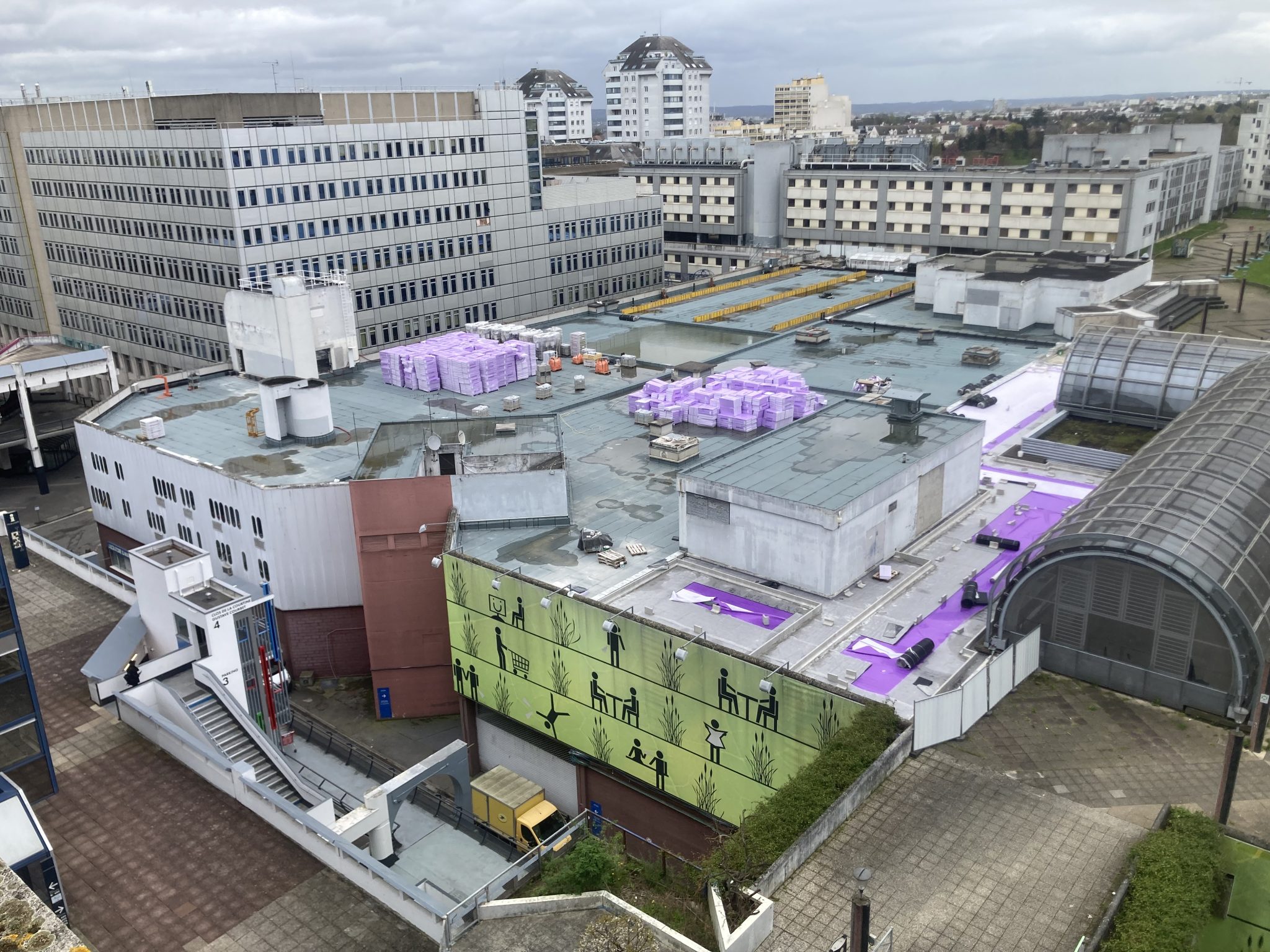
A vast rooftop above a shopping center in Noisy‑le‑Grand, France, used to be an overlooked technical surface. Now, the 5000 m² area is being turned into a vegetable garden. The rooftop construction relies on Jackodur Evo XPS insulation from BEWI, providing thermal performance while enabling a durable inverted roof construction.


From technical roof to food production

The renovation began with removal of the existing rooftop structure. Once the concrete deck was exposed, the opportunity to rethink the space arose: Creating an urban agricultural garden.

When completed, the rooftop will supply fruits and vegetables to local residents and businesses. An on-site food concept will prepare healthy meals, primarily salads, delivered daily by cargo bikes. The site will also host workshops and events focusing on urban agriculture. The initiative is part of a wider district development and follows the city’s call for innovative urban projects – and carries the name “Ma salade à toit.” (My rooftop salad)


Insulation supporting ecological goals

For this project, the patented Jackodur Evo XPS insulation was selected for its thermal performance, durability and constant lambda value across thicknesses. Reduced material volume and one-layer installation support efficiency and a lower carbon footprint during transportation.

“We are familiar working with BEWI’s inverted roof insulation,” explains Clément Jahan from SMAC, the contractor. “The XPS boards are quick and easy to install. We also appreciate the technical support and knowledge of BEWI’s sales team”

A rooftop vegetable garden built on smart materials

Following the insulation, a specially engineered substrate was added. This lightweight, rooftop‑specific growing medium includes crushed shells, coffee grounds, brick fragments, wood fiber, and bark — a combination that provides essential minerals while ensuring efficient drainage for rain and irrigation water. A second, more organic layer completes the system and supports optimal crops.

“We apply agroecological techniques to create an urban vegetable garden that is both productive and purpose‑driven,” says Grégory Shepard, founder of “Ma salade à toit”.